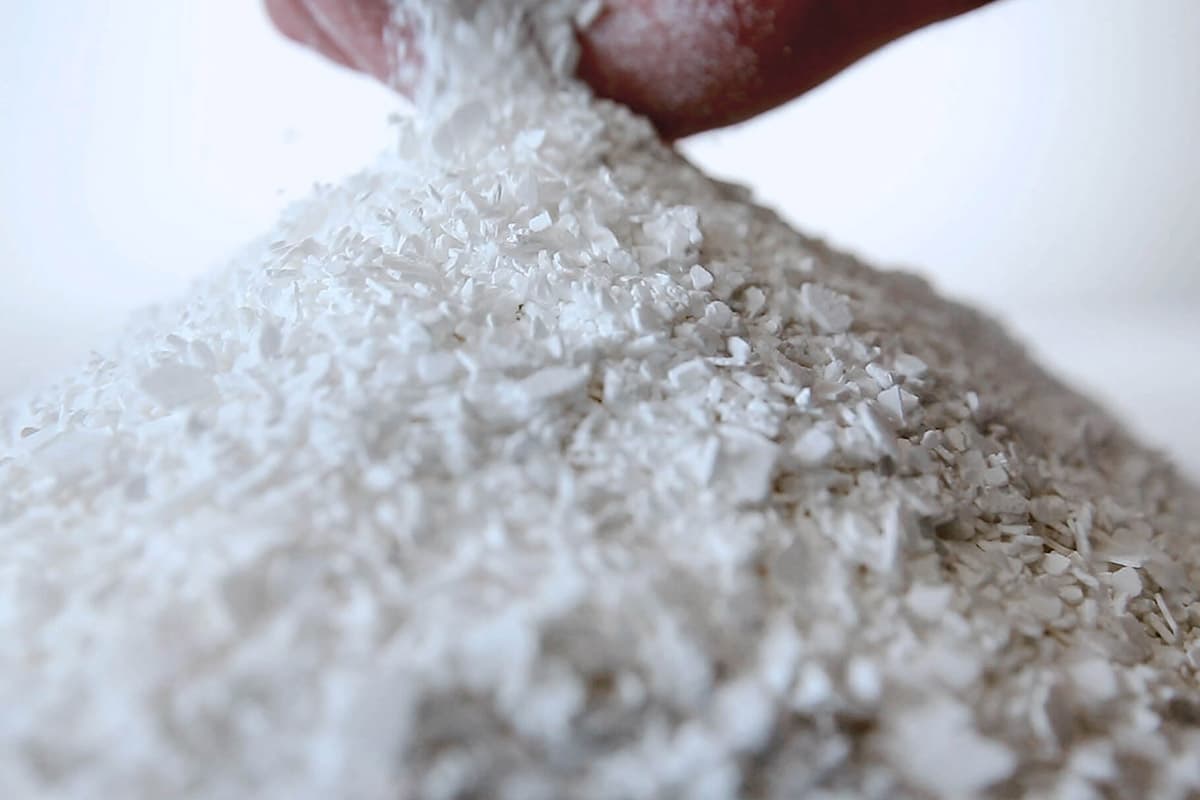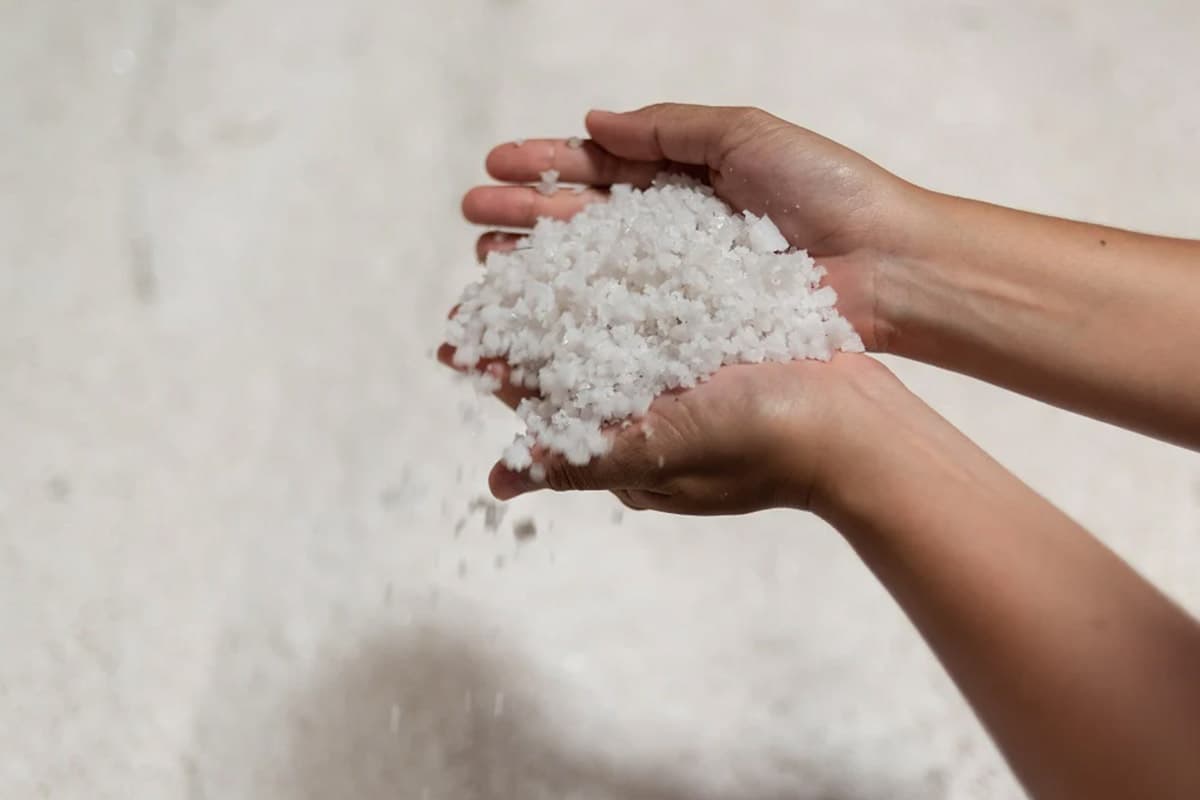
Calcium chloride (CaCl₂) is sold in several physical forms and concentrations, and the number on the bag — 74%, 94%, 96% — refers to the CaCl₂ content. Choosing the wrong grade means either paying for concentration you don't need or under-dosing an application that needs the higher purity.
The common grades
| Grade | Form | Typical CaCl₂ | Best for |
|---|---|---|---|
| 74% | Lumps / flakes | ~74–77% | De-icing, dust control, general industrial |
| 91–94% | Powder | 91–94% | Drilling fluids, water treatment, broad industrial use |
| 96% | Prills / granules | ~96% | Oilfield brines, applications needing high purity and fast dissolving |
| Food grade | Powder / granules | ≥ 96% (E509) | Firming agent, brine, cheese, beverage |
Form matters as much as percentage
- Lumps dissolve more slowly and are economical for bulk de-icing and dust suppression.
- Powder dissolves quickly and is easy to dose, making it the workhorse for water treatment and many industrial uses.
- Prills (round granules) are low-dust, free-flowing, and dissolve fast — preferred for oilfield brine make-up and clean handling.
Match the grade to the job
- De-icing and dust control: 74% lumps or flakes are usually the most cost-effective.
- Drilling and completion fluids: 94% powder or 96% prills, depending on the brine density and handling preference.
- Water treatment (hardness, conductivity): 94% powder for easy, consistent dosing.
- Food and beverage: food-grade material labelled E509 with a food-grade Certificate of Analysis.
What to confirm on the COA
Beyond the headline percentage, check the CaCl₂ assay, alkalinity/pH of solution, water-insoluble matter, and — for food grade — heavy-metal limits and the E-number identity. A reputable supplier provides all of this against the specific batch you receive.
Ananta Industries manufactures and exports calcium chloride in 74% lumps, 91–94% powder, and 96% prills, plus food-grade material, with a Certificate of Analysis on every consignment. Tell us your application and we'll recommend the grade.