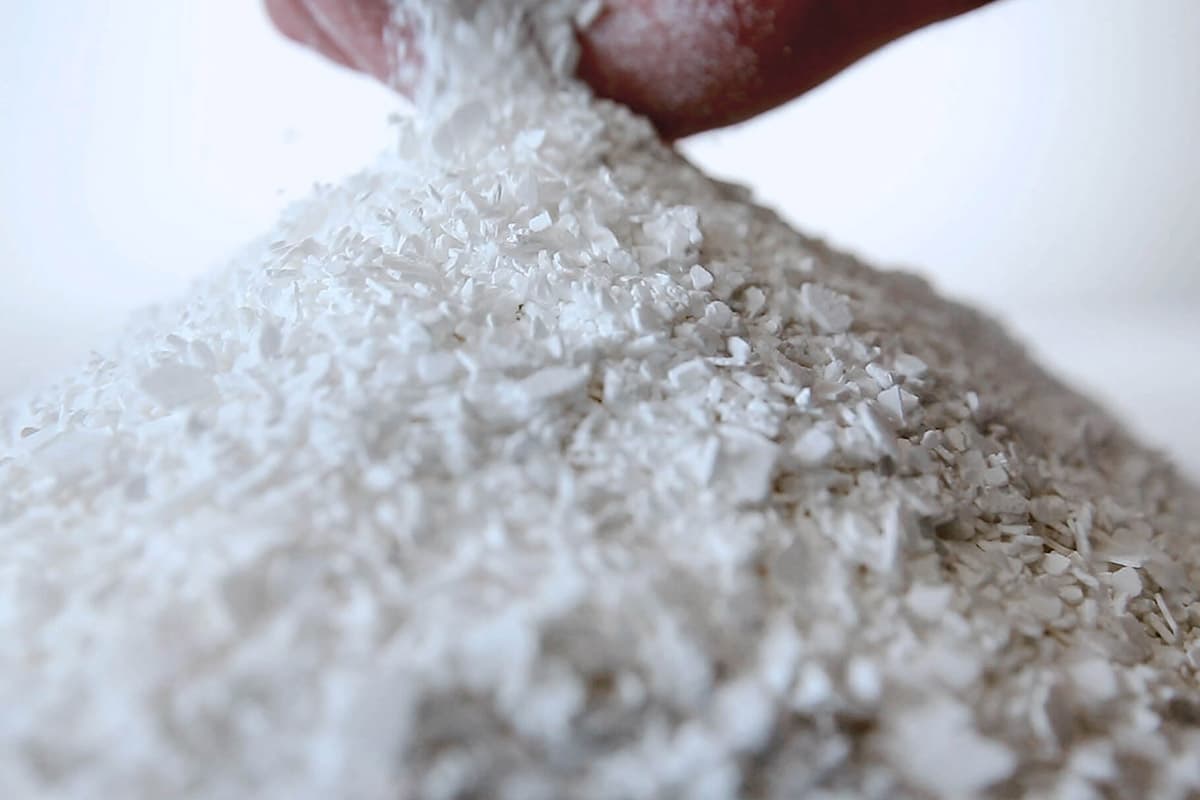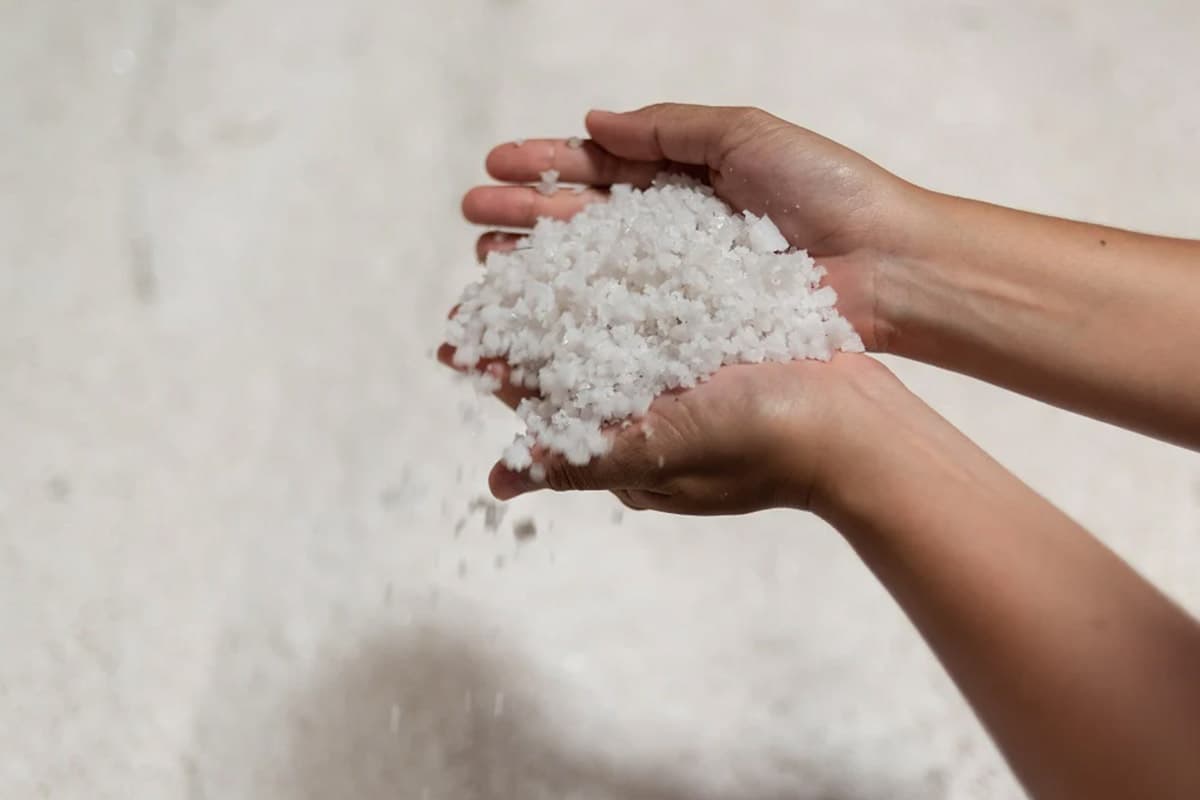
Calcium chloride (CaCl₂) and magnesium chloride (MgCl₂) are both hygroscopic chloride salts used for de-icing and dust control. They work on the same principle — drawing moisture from the air and depressing the freezing point of water — but they differ on how cold they keep working, how much heat they release, and how they handle and cost out.
Head to head
| Factor | Calcium chloride | Magnesium chloride |
|---|---|---|
| Effective to roughly | −25 to −30 °C | −15 to −20 °C |
| Heat on dissolving | Exothermic — releases heat, melts fast | Mild |
| Hygroscopicity | Very high | High |
| Typical cost | Higher | Often lower |
| Common forms | Flakes, powder, prills | Flakes, powder |
When calcium chloride wins
- Very low temperatures, where MgCl₂ stops working but CaCl₂ keeps melting.
- Fast melt-down needs — its exothermic dissolution starts melting ice quickly.
- Dust control in hot, dry climates where strong moisture retention keeps surfaces bound.
When magnesium chloride wins
- Milder winters where extreme low-temperature performance isn't required.
- Budget-led programmes where the lower price per tonne matters and conditions are moderate.
- Applications where a gentler material is preferred.
A note on corrosion and concrete
All chloride de-icers can promote corrosion of metals and affect concrete; the right choice and dose depend on the surfaces involved. For dust control, the goal is steady moisture retention rather than melting, so hygroscopicity and reapplication frequency drive the decision.
Ananta Industries supplies both calcium chloride (74% lumps, 94% powder, 96% prills) and magnesium chloride in bulk with documentation on every shipment. Tell us your climate and application and we'll recommend the grade.